
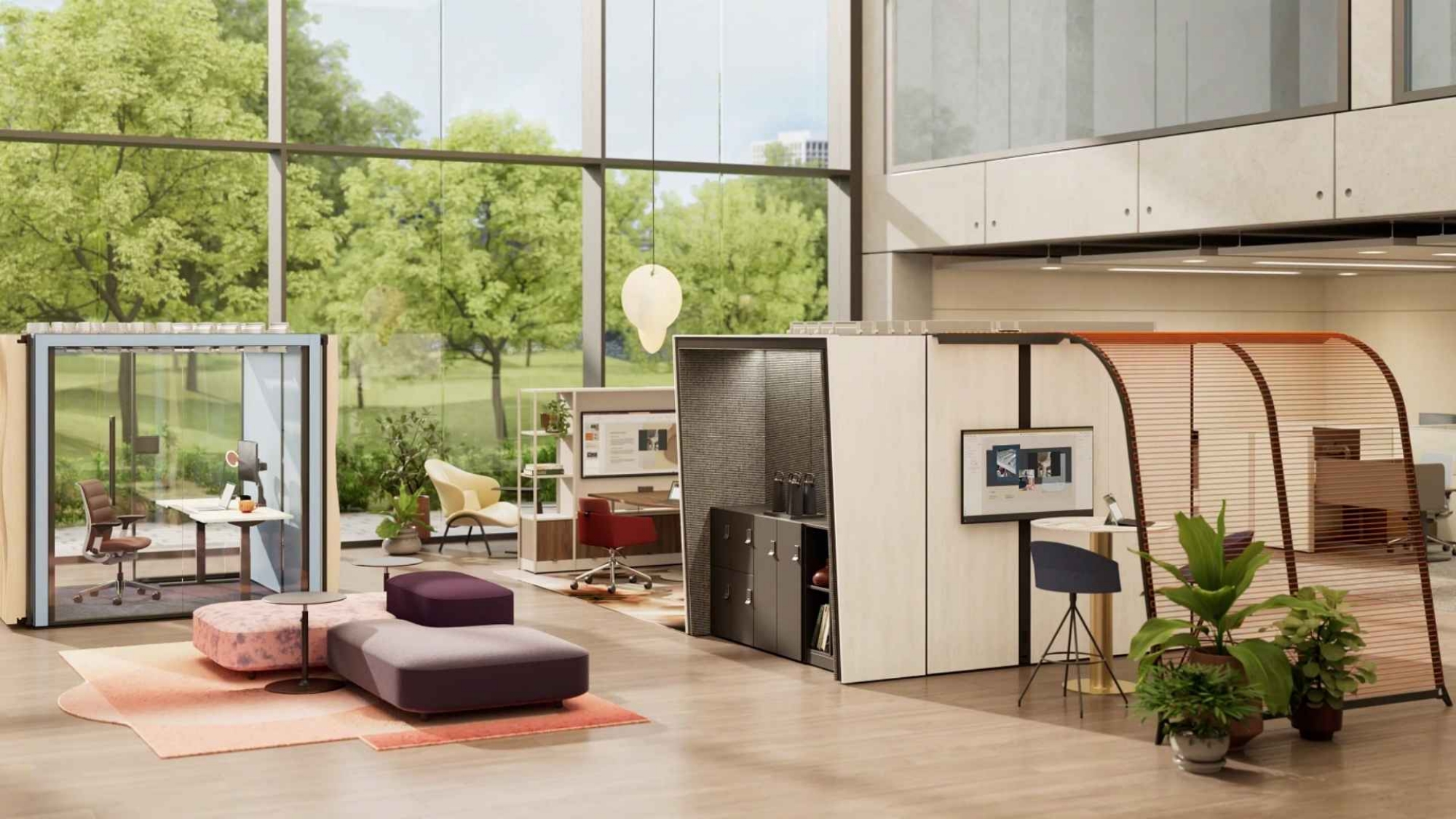
Workplace stress often starts with the office itself, not just the workload. New Steelcase research shows that noise, light, shape, and layout all shape how people think and feel at work. Because most of these triggers stay invisible, employees rarely name them and leaders rarely fix them.
People spend about 90% of their time inside buildings, according to the Steelcase report Your Office Is Talking to Your Brain. As a result, small stressors add up across every workday. Fortunately, most of the fixes are affordable and work in an existing space.
Below are five hidden triggers from the research, plus practical ways to address each one. Create Spaces designs and builds workplaces across Boise, Reno, and Las Vegas. So we also share how these fixes look in a real office.
1. Open Office Noise Raises Workplace Stress
Open office noise is one of the most measurable sources of workplace stress. One study cited by Steelcase linked open-plan noise to a 25% increase in negative mood. The same study found a 34% increase in physiological stress.
Noise drains focus even after people stop noticing it. Furthermore, constant background conversation makes deep work harder for everyone nearby.
How to fix it:
- Add acoustic panels, ceiling treatments, and sound-absorbing screens
- Separate loud collaboration zones from quiet focus areas
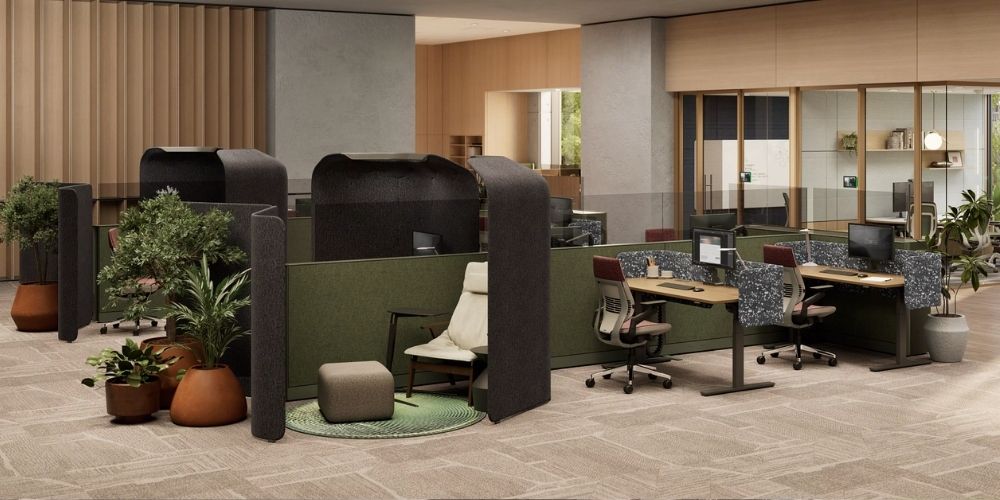
- Use rounded workstation screens that absorb sound
Create Spaces partners with acoustics specialists like MPS Acoustics to treat noise at the source. For more on sound and focus, read our guide to distractions at work.
2. Constant Interruptions Leave No Room to Focus
Interruptions drive workplace stress because attention is a limited resource. Research by Gloria Mark found that screen-based attention fell from about 2.5 minutes in 2004 to roughly 47 seconds. In addition, people get interrupted about every two minutes.
Recovery takes time. Getting back to a task can take about 23 minutes, and sometimes people never return at all. Also, people interrupt themselves more often than others interrupt them.
How to fix it:
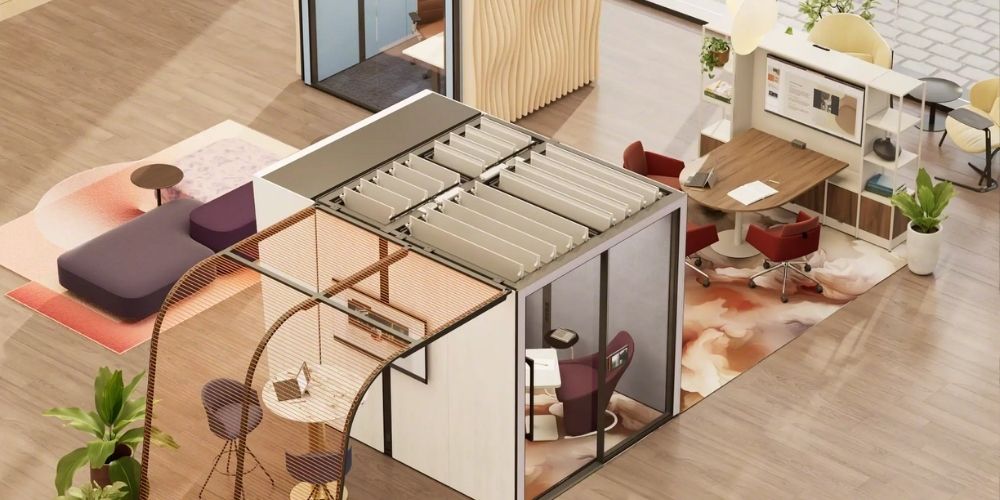
- Add reservable enclaves, which are quiet, enclosed pods with comfortable seating
- Create library-style areas with warm materials and natural light for deep work
- Install small booths for quick private calls, so calls stay out of open areas
Most meetings are small. In fact, VergeSense data cited by Steelcase shows about 80% of meetings involve two people. As a result, small enclaves often get more use than large rooms. See our guide to conference room design for sizing tips.
3. Poor Lighting and Limited Daylight
Lighting affects workplace stress in ways most people never notice. Flicker from some LED and fluorescent lights affects roughly 10% to 15% of people in a space. Effects include larger pupils, more brain activity, and slower reading.
Daylight matters too. Researchers have linked disrupted daylight exposure to dysregulated stress hormones. For that reason, the Steelcase report treats daylight access as a need rather than a perk.
How to fix it:
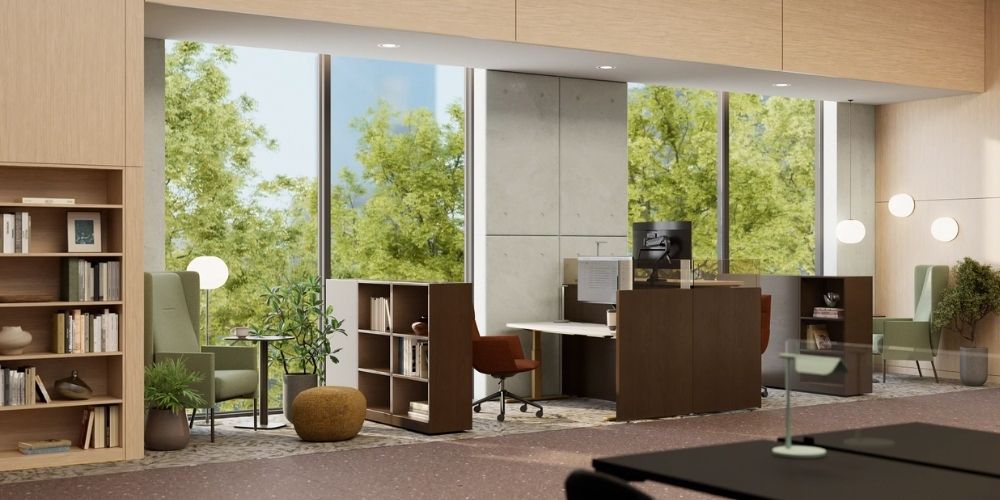
- Use glass walls and interior partitions to carry daylight deeper into the floor plan
- Give everyone access to daylight, not just private offices along the windows
- Replace flicker-prone light fixtures
Create Spaces builds glass-front offices with Falkbuilt interior construction. Because the walls let light through, more people benefit from the windows.
4. Sharp Edges and Repetitive Patterns
Room shape and surface patterns can quietly add to workplace stress. In one virtual reality study, people in curved rooms had lower heart rates and a more positive mood. They also performed better on creativity tasks than people in rectangular rooms.
Highly repetitive patterns can also strain the brain. The report points to stair treads, ceiling panels, and carpets as common examples.
How to fix it:
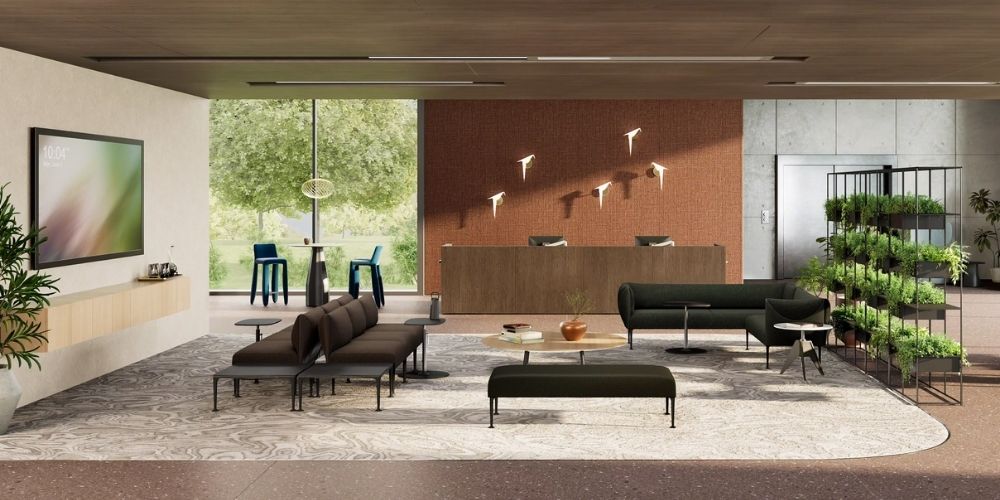
- Choose furniture with rounded edges and curved forms
- Select flooring with varied, organic patterns rather than tight repeating stripes
- Add wood, natural textures, greenery, and views of nature
Create Spaces handles furniture and flooring together. As a result, both elements work as one design rather than competing with each other.
5. No Choice in Where or How People Work
A lack of control is a major driver of workplace stress. Steelcase research across 11 countries found that asking people about their space is linked to 22% higher wellbeing scores. In other words, involving employees matters as much as the furniture.
Different people need different settings. Personality, task, and mood all shape where someone works best. Also, one study found enclosed rooms raised stress responses for some people, so open options matter too.
How to fix it:
- Plan team neighborhoods with a mix of open and enclosed spaces
- Add collaboration zones with mobile tables, stools, and swivel seating
- Survey employees before and after a redesign
For more on balancing open and private space, read our breakdown of open office layouts.
Why Workplace Stress Matters More as AI Changes Work
AI now handles more routine tasks, so people spend more time on judgment, creativity, and complex problem-solving. That kind of thinking depends on attention, which stress depletes. As a result, the office plays a direct role in how well teams perform.
Steelcase calls this designing for healthy brain function over time. Leaders who address workplace stress in the space give their teams better conditions to think.
Frequently Asked Questions About Workplace Stress and Office Design
How does office design affect workplace stress?
Office design affects workplace stress through noise, lighting, room shape, and layout. Research cited by Steelcase links open-plan noise, flickering lights, and limited daylight to higher stress responses. Because these effects build slowly, people often can’t pinpoint the cause.
What causes the most stress in an open office?
Noise is one of the most measurable stressors in an open office. One study linked open-plan noise to a 34% increase in physiological stress. Acoustic treatments and quiet enclaves help reduce that load.
Can office lighting cause stress?
Yes. Flicker from some LED and fluorescent lights affects roughly 10% to 15% of people, often without them noticing. Limited daylight has also been linked to disrupted stress hormones.
How can I reduce workplace stress without a full renovation?
Start with the fixes the Steelcase report calls achievable in most buildings. These include better daylight access, curved furniture, views of nature, and a choice of settings. Adding a few enclaves or acoustic panels often makes a noticeable difference.
What is neuroarchitecture?
Neuroarchitecture studies how buildings and spatial planning affect the brain, body, and behavior. It draws on neuroscience to guide decisions about light, shape, materials, and layout. Steelcase uses this research to inform how it designs workplace settings.
Why do curved spaces feel calmer?
In one virtual reality study, people in curved rooms showed lower heart rates and a more positive mood. Curved transitional spaces also helped people recover faster after a stress test. Rounded furniture brings some of that effect into a standard office.
Find the Hidden Stressors in Your Office
Create Spaces helps organizations in Boise, Reno, and Las Vegas spot hidden stressors and fix them. We combine Steelcase furniture, acoustics, interior construction, and flooring into one plan. Schedule a workspace assessment here or visit a showroom to experience these settings in person.
Source: Steelcase, Your Office Is Talking to Your Brain. Is It Saying the Right Things?, Work Better Research Report, 2026. Explore more at Steelcase Research & Insights.
Let’s Build a Smarter Space
Whether you’re preparing for a new office, renovation, or expansion, we’ll help you implement flexible, high-performing solutions that adapt as your needs change.