Most offices don’t need more space—they need better-performing space.
When it comes to conference room design, many businesses are working with rooms that look right but don’t actually function well for meetings, collaboration, or hybrid work. As a result, these spaces often sit underused or create frustration instead of productivity.
Walk through your workplace and you’ll likely notice it:
Conference rooms sitting empty
Workstations that make it hard to focus
Lounge areas that look great but rarely get used
This isn’t a space issue—it’s a design issue.
Inspired by insights from Steelcase research, here’s how to rethink your office using smarter layouts, better furniture, and intentional design.
Why Conference Room Design Matters
Today’s office needs to support how people actually work. For example, employees are constantly shifting between focus work, collaboration, and hybrid meetings.
However, many conference rooms were designed for a different era. Because of this, they no longer support the way teams meet today.
That’s why businesses are rethinking conference room design to better align with real work behaviors.
5 Conference Room Design Ideas (and Other Office Spaces to Rethink)
1. Conference Rooms That Go Unused
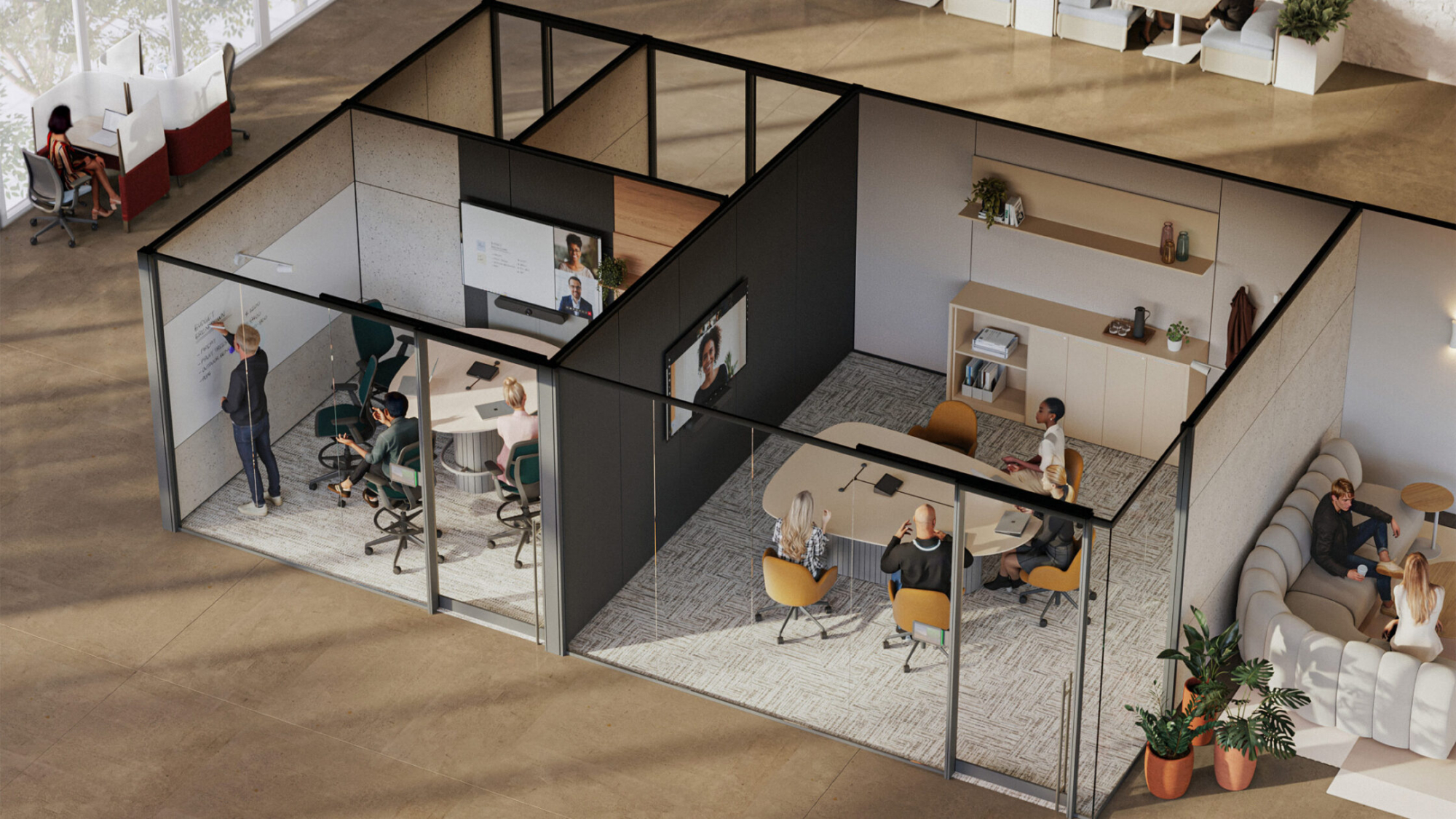
The problem: Large conference rooms are often underutilized and oversized for daily meetings.
The fix: Instead, break them into smaller, more functional spaces:
Huddle rooms (3–5 people)
Video-enabled meeting rooms
Quick breakout spaces
A well-planned conference room design should match how your team actually meets—not just how the room looks on paper.
2. Open Workstations That Limit Focus
The problem: Open office layouts create distractions, noise, and lack of privacy.
The fix: To improve focus without sacrificing openness:
Add acoustic panels or screens
Reorient desks for privacy
Provide nearby focus rooms
Ultimately, the goal is balance—not eliminating open space, but making it usable.
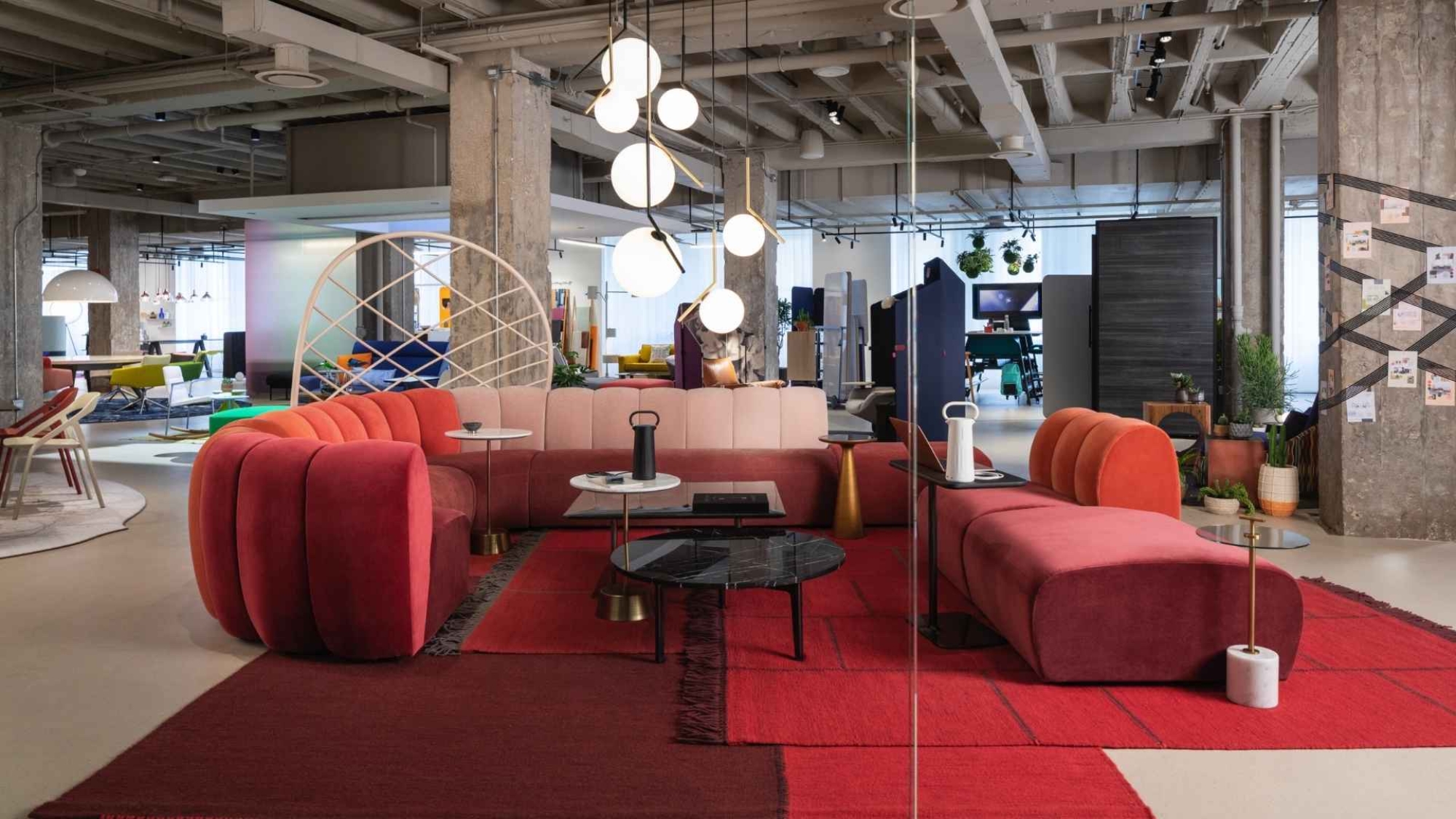
3. Lounge Areas That Don’t Get Used
The problem: Many lounge areas are designed for looks rather than performance.
The fix: To make them functional:
Add power and charging
Include tables for laptops
Create zones for both focus and collaboration
As a result, these areas become some of the most used spaces in the office.
4. Breakrooms That Miss the Opportunity
The problem: Breakrooms are often limited to eating only.
The fix: Instead, turn them into flexible hubs:
Add varied seating
Create areas for informal meetings
Include storage like lockers or cubbies
Because of this, these spaces naturally support collaboration and connection.
5. Static Layouts That Don’t Adapt
The problem: Traditional offices are fixed, but workstyles constantly change.
The fix: Design for flexibility:
Modular furniture systems
Mobile desks and storage
Spaces that can shift over time
This ensures your office stays relevant as your team evolves.
The Big Takeaway
Most offices aren’t underperforming because they’re too small. Instead, they’re underperforming because they weren’t designed for how people work today.
By improving your conference room design and overall layout, you can:
Improve productivity
Support hybrid work
Increase collaboration
Get more value from your space
How to Improve Your Conference Room Design
Start with a simple approach:
1. Identify underused areas Where are people not spending time?
2. Understand why Is it layout, noise, lack of technology, or comfort?
3. Add function Every space should support a purpose.
4. Think in zones Not just rooms—create experiences within your workplace.
How Create Spaces Can Help
At Create Spaces, we help companies rethink their environments through:
Office furniture solutions
Conference room design and AV integration
Workplace strategy and space planning
Modular walls and flexible environments
As a Steelcase partner, we bring proven research and real-world application together to create spaces that work better.
Final Thoughts
The best workplaces today aren’t bigger—they’re smarter.
If your space feels like it’s not working as hard as it could, it probably isn’t. However, the solution isn’t starting over.
If you’re searching for commercial office furniture, you’re probably not looking for trends. Instead, you’re asking practical questions about office furniture planning that impact real work.
For example, you may be wondering:
How do we design an office people actually want to come into?
What furniture supports focus and collaboration without constant rework?
How do we plan for technology, acoustics, and flexibility without overbuilding?
Can one partner really handle furniture, floors, walls, and technology together?
If those questions sound familiar, this article is for you.
At Create Spaces, we work with medium to large organizations every day. As a result, we help teams plan offices that function better, feel better, and last longer. Below, we’ll walk through what matters most when choosing commercial office furniture today—and how thoughtful office furniture planning helps you get it right the first time.
1. What People Really Want From Commercial Office Furniture
Employees don’t ask for design trends. Instead, they ask for spaces that work.
In most cases, that means:
Comfortable seating that reduces fatigue
Places to focus without constant noise distractions
Conference rooms that support hybrid meetings
Shared spaces that feel intentional, not leftover
Because of this, commercial office furniture should support how people work every day. It should not force teams into one rigid setup.
That’s why successful offices now include:
A mix of focused work areas and collaborative zones
Furniture that adapts as teams change
Materials that feel calm, durable, and easy to maintain
2. Flexibility Matters More Than Square Footage
One of the biggest questions businesses ask is simple: How do we future-proof our office without rebuilding every few years?
The answer isn’t more furniture. Instead, the answer is smarter furniture planning.
Rather than rows of identical desks, high-performing offices rely on:
Modular workstations that shift as teams evolve
Shared desks paired with lockers or mobile storage
Conference tables that support multiple meeting styles
Furniture that integrates power, data, and technology
As a result, teams gain choice while the office remains adaptable over time.
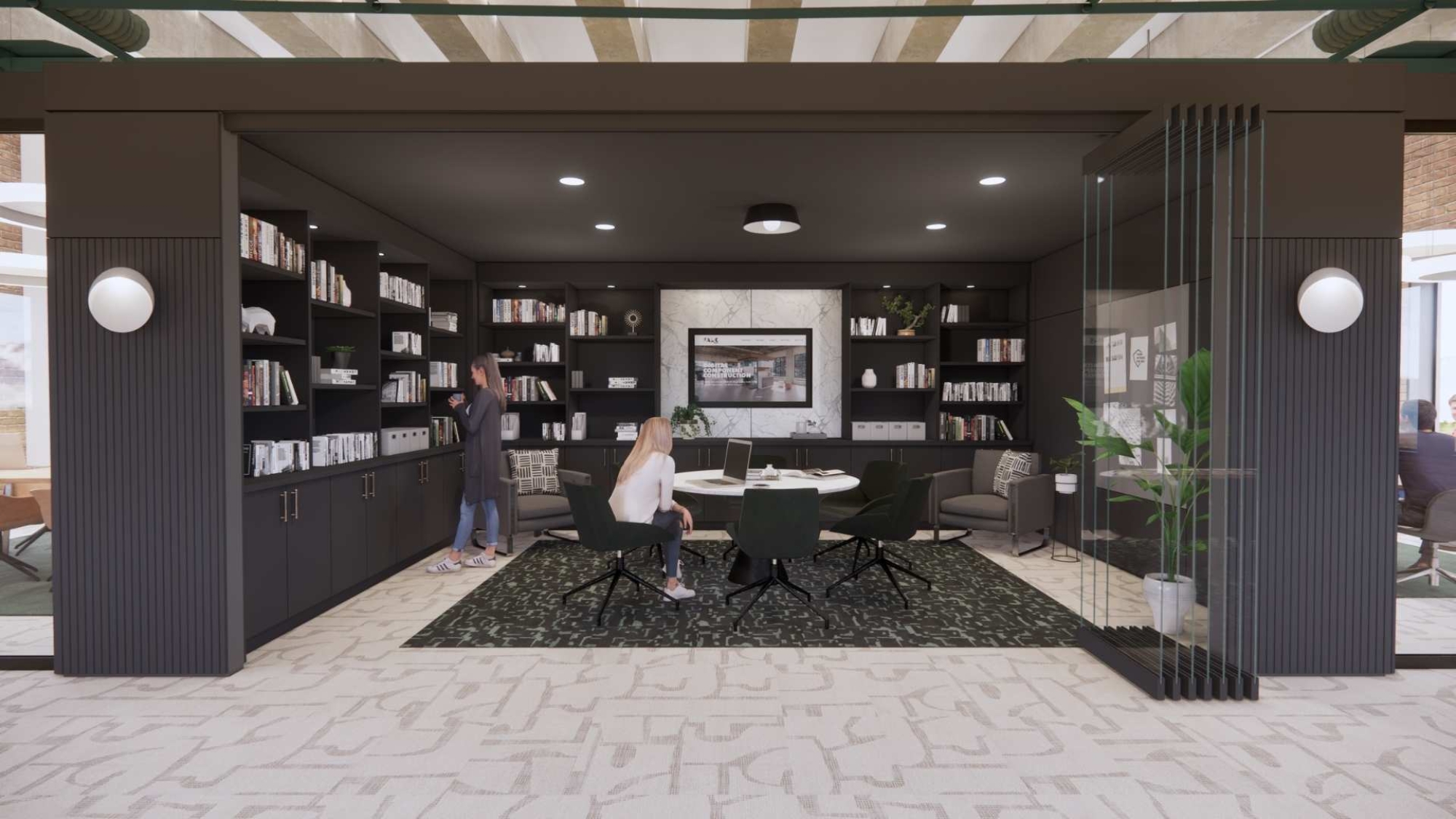
3. Conference Rooms Need to Do More Than One Job
Conference rooms are no longer just for in-person meetings. Today, they must support a wider range of work.
For instance, modern conference rooms often need to handle:
Hybrid collaboration
Video calls and presentations
Workshops and small group sessions
A well-planned conference table anchors the room. It supports technology, improves sightlines, and sets the tone for collaboration. When paired with proper lighting, acoustics, and AV integration, conference spaces become assets rather than bottlenecks.
Because of this, Create Spaces designs conference rooms as complete systems—not just furniture drop-ins.
4. Comfort, Acoustics, and Well-Being Are Non-Negotiable
People are far more aware of how their environment affects how they feel. Because of that, comfort and acoustics now matter more than ever.
That’s why commercial office furniture decisions often include:
This approach isn’t about luxury. Instead, it’s about reducing friction during the workday.
When people are comfortable, they focus better. Meanwhile, when noise is managed, productivity improves. Ultimately, when spaces feel intentional, employees stay longer.
5. Hospitality-Inspired Spaces Aren’t About Style—They’re About Trust
Many organizations are rethinking lobbies, break areas, and shared spaces. There’s a reason for this shift.
Simply put, first impressions matter.
A clean, calm, hospitality-inspired entry space signals:
Professionalism
Stability
Competence
However, this doesn’t require flashy finishes. Instead, it means:
Durable, welcoming furniture
Clear wayfinding
Thoughtful lighting
Materials that age well
Create Spaces helps organizations design entry spaces that feel welcoming without feeling overdesigned.
6. Why a Full Integrator Makes Office Furniture Decisions Easier
One of the most common frustrations we hear is this: “We bought great furniture, but it doesn’t work with the floors, walls, or technology.”
That’s where Create Spaces is different.
We’re not just a furniture dealer. Instead, we’re a full integrator that coordinates:
Because we plan these elements together, your office functions better. Additionally, it looks cohesive, costs less to modify later, and supports long-term growth.
Effective office furniture planning eliminates rework and creates spaces that perform from day one.
7. How to Know You’re Making the Right Furniture Decisions
Before moving forward, ask yourself a few key questions:
Does this furniture support multiple work styles?
Can this space change without major construction?
Will this still work if our team grows or shifts?
Does this integrate with technology rather than fight it?
If the answer is yes, you’re on the right path. If you’re unsure, that’s exactly where we help.
Conclusion: Commercial Office Furniture Should Work for You
Commercial office furniture isn’t about trends. Instead, it’s about supporting people.
At Create Spaces, we help organizations design offices through intentional office furniture planning that:
Supports productivity and well-being
Adapts over time
Integrates furniture, floors, construction, and technology
Feels intentional from day one
If you’re planning a new office, renovation, or reconfiguration, we’re here to help you think through it clearly, practically, and strategically.
Why Commercial Office Furniture Matters More Than Ever
The workplace is changing faster than ever. Hybrid schedules, evolving technology, and shifting employee expectations are reshaping what commercial office furniture needs look like — not someday, but right now. If your business is located in Boise, Reno, or Las Vegas, the furniture decisions you make today must still support your teams in 2027 and beyond.
According to new research from Steelcase, the most successful organizations are designing offices that are flexible, multi-purpose, human-centered, and built for constant change. That means the era of buying furniture just to “fill space” is over. Your seating, workstations, conference rooms, lounges, and private offices need to adapt, reconfigure, and support different styles of work over time — not just one.
Your office should be more than a place to work — it should be a place that inspires people to want to do their best work.
As a Steelcase dealer serving Idaho and Nevada, Create Spaces helps organizations choose commercial office furniture that will stay functional and relevant as workplace needs continue to evolve. Here’s how to choose furniture with confidence, so your workspace is future-ready.
1. How Commercial Office Furniture Supports Real Work Patterns
Before selecting furniture, look closely at how your teams use space:
Do employees switch between individual focus and group collaboration?
Steelcase studies show that offices now succeed when they support variety — not just rows of desks or only open collaboration space. Medium and large businesses are especially focused on:
Spaces for deep focus
Team collaboration hubs
Private spaces for 1:1 conversations
Multi-purpose meeting zones
Your furniture should reflect these needs — not fight them.
2. Choose Office Seating That Supports Wellness & Movement
Office seating directly impacts comfort, focus, productivity, and long-term health. Steelcase research highlights that employees feel better and perform better when seating encourages movement and alignment.
Look for:
Adjustable height and lumbar support
Multiple posture support options
Breathable, durable materials
Chairs designed for all-day use — not just occasional use
Businesses are prioritizing fewer chairs, but better ones — a shift driven by hybrid work patterns.
3. Commercial Office Furniture Workstations That Adapt Over Time
Your team structure likely won’t stay the same for the next three years — your furniture shouldn’t be rigid either.
Choose workstation systems that:
Reconfigure easily
Support individual or shared use
Allow height adjustments
Manage power + technology cleanly
Scale as your headcount changes
Steelcase calls this trend “dynamic desking” — workstations that evolve as work changes, not work that must adapt to furniture.
4. Re-Think Conference Rooms to Support Hybrid Collaboration
Conference rooms are no longer just for in-person meetings. Today, they must support mixed presence collaboration.
Allows clear sightlines for in-person + remote participants
Fits the room — not too large, not too small
In Boise, Reno, and Las Vegas, we’re seeing demand for:
Flexible meeting rooms with movable conference tables
Small private rooms equipped for video calls
Larger gathering spaces that flex from workshop to presentation mode
When chosen well, your conference table becomes the anchor of your collaboration culture.
5. Balance Private Offices with Shared Focus Spaces
Steelcase research shows private offices still matter — especially for:
Leaders who support teams
HR + finance roles
Employees who need deep focus time
However — private space doesn’t always need walls. Acoustical pods, phone booths, and focus nooks offer privacy without the cost or permanence of construction.
This keeps your office layout flexible as business needs shift.
Conclusion
Choosing the right office furniture today means planning for how your teams will work tomorrow. When your office is flexible, functional, and human-centered, people feel better, collaborate more naturally, and produce better results.
At Create Spaces, we’re here to guide you — step by step — through planning, selection, space design, and installation. We’ll help you choose furniture that adapts with your organization, supports your people, and stays relevant through 2027 and beyond.
If you’re ready to start exploring what your future office could look like, we’d love to help. Let’s create a workspace where your people can thrive.